

1.1 Netnography as a methodology and a research field
1.1.1 What is Netnography?
 |
...Netnography - a portmanteau combining network, Internet, and ethnography (Kozinets, 2020, p. 6)
Ethnographic internet research - Netnography - is a research field and methodology with specific methods for doing qualitative social media research (Kozinets, 2010, 2015, 2020). Netnography can be understood as an extension of Ethnography, including a systematic and updated toolbox of existing methods and a methodological umbrella concept for studying digitally mediated interaction. Methodologically, Netnography is rooted in the classic ethnographic notion of participant observation. Participant observation is about forming extended, personal relations with participants (the people being studied). The aim is to achieve a sufficient degree of inclusion in their lives so that the researcher may understand a certain social field from the perspectives of the participants (Davies, 2008). Netnography is based on two insights: that nearly all aspects of our social interactions are today to some degree digital and that digitally mediated interactions need to be studied using methods suited to study these digital interactions. Netnography is used to study social experiences online, or “online networks of social interaction and experience” (Kozinets, 2015, p. 100).
Nowadays, it is almost impossible to differentiate between social life on the internet and other forms of social life. However, Kozinets (2010) points out that social interactions on the internet differ from social interactions offline in some notable ways. As we outline these differences, some key aspects of Netnography may be distinguished that we will return to throughout this module. Netnographic research needs to consider the following aspects associated with digitally mediated social interactions: 1) issues concerning availability and inclusion, for example, in relation to participation and observation; 2) collecting and analysing material, for example, in relation to the amounts of empirical material and the taking of field notes, 3) research ethics (Kozinets, 2010). Additionally, netnographic research should consider 4) change, as digital tools mediate communication in different ways, and 5) colonisation, given how a few large, multinational companies affect online interactions (Kozinets, 2015).
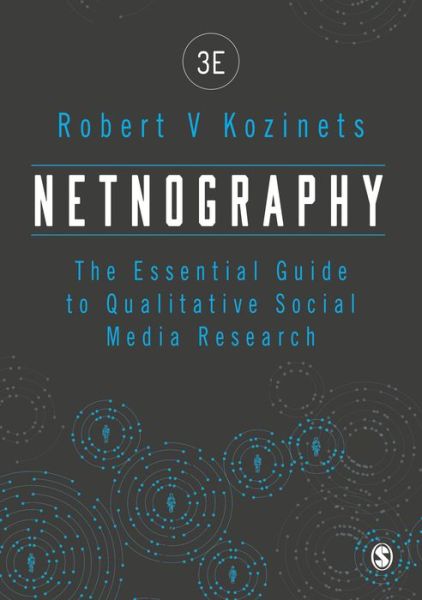 In this module, references and suggestions for further reading are suggested. Several types of scientific texts are mentioned. One book of particular relevance to the design of this course module is Robert V. Kozinets' updated third book on Netnography from 2020, Netnography: The essential guide to qualitative social media research, and references to different chapters of this book are provided throughout the course.
 References
- Davies, C.A. (2008). Reflexive ethnography: A guide to researching selves and others. London: Routledge.
- Kozinets, R.V. (2010). Netnography: Doing ethnographic research online. Los Angeles, CA: Sage Publications.
- Kozinets, R.V. (2015). Netnography: Redefined (2 ed.). Thousand Oaks, CA: Sage Publications.
- Kozinets, R.V. (2020). Netnography: The essential guide to qualitative social media research (3 ed.). Thousand Oaks, CA: Sage Publications.