

Markup Languages and text modelling
Textual Scholarship, Markup and Modelling
Modelling has always been a core activity of textual scholarship as the human record has been migrated from oral traditions to written ones, from handwriting on any number of surfaces, from parchment to stone, in caves, on tombstones, sacred and profane, to print, and more recently to electronic forms of composition, storage, and distribution.
For centuries textual scholars have made choices in disambiguating marks on page, in deciding how to format text as it migrates from one form to another, to show changes in a work over time, be they authorial (i.e. created by the author of the work) or by other agents (editors, relations, friends, or unknown scribes).
In the eighteenth and nineteenth centuries as print became the de facto medium in which to transmit en masse the textual record, be it for pleasure (the rise of the novel), for religious purposes (the reproduction of sacred texts and commentary), for or political purposes (as a way of defining the new nation states and their peoples by their literary inheritance), so too the need arose for individuals to adjudicate on the version of the text to be published, what introductory material might be included, or which texts should be group 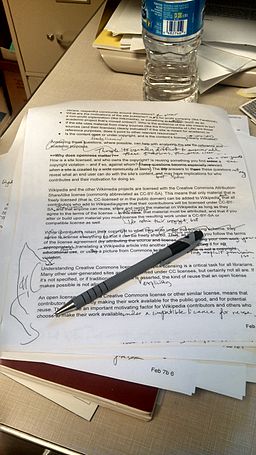 together and published as collections.
As publishing became an industry in its own right, a text might pass through many hands before it was published. Long before the invention of computers, markup was used to annotate a text to instruct a compositor or typist how a particular passage should be printed or laid out.
Examples, familiar to proofreaders and others, include a caret to add in extra text, special symbols for passages to be omitted or printed in a particular font, and so forth. Even today, although texts are now, by and large set through soft type on a computer (as opposed to hard type which was done manually with slugs for each character) when publishers return proofs to authors or editors, it is still the norm to print out the proofs and use these same symbols to indicate what changes need to be made to the text.
With the rise of computers to generate text (either for print or electronic publication) the term markup was extended to cover all sorts of special codes to govern formatting, processing and analysis. Textual scholarship has adapted to suit this relatively new medium. To make the textual record suitable for digital re-presentation, metadata in the form of specialised markup languages are used. This will be explained in much greater detail in the next section.