

Unit III: Social Justice in Digital Humanities Practice
3.4 Lights and Shadows: The PhilPeriodicals Collaboration Between the Philippines and Belgium in DH Digitization and Training
 |
This case study is written by Rocío Ortuño Casanova. This page is designed by Anna Villarica.
Introduction
 |
|
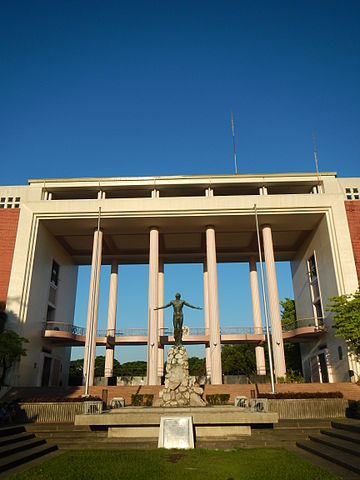
University of the Philippines-Diliman by Ramon FVelasquez
|
In 2016, the College of Humanities of the University of the Philippines in Diliman burnt to the ground in a fire that wiped out the Pablo K. Botor Library, containing hundreds of theses and unique copies of books. This was not an isolated event: between 2013 and 2018, four buildings of the University of the Philippines and the National Historical Archives of The Philippines burnt down. It was precisely the issue of document preservation that led a group from the University of the Philippines in Diliman and a team from the University of Antwerp to collaborate together on a project, PhilPeriodicals, that had two objectives: firstly, the preservation of documents, especially newspapers because of their vulnerability and their importance for the study of artistic production, history, and Philippine society. And secondly, improving the accessibility of these documents, not only from outside the Philippines, but from within the Philippines, as even for Filipino scholars the distances, time, and money needed to travel to consult them could be prohibitive.
The research team of the University of Antwerp belongs to the research group ACDC and includes Mike Kestemont, Dirk Van Hulle and myself among others, while the interdisciplinary team from the University of the Philippines was spearheaded initially by Sir Anril P. Tiatco and afterwards by Ramon Guillermo, joined by Anna Sarmiento and Chito Angeles, the head librarian of the University of the Philippines. Together, we applied for a TEAM project from the Flemish Agency for Academic Cooperation (VLIRUOS) and were successful in obtaining a four-year grant for €249,922 with the goal of preserving these unique documents, strengthening collaboration between our teams, as well as provide training in digital skills to professors in order to analyze and utilise these documents. Another no less important goal was to train the library team in methods to make these documents publicly available.
Rationale
 |
|
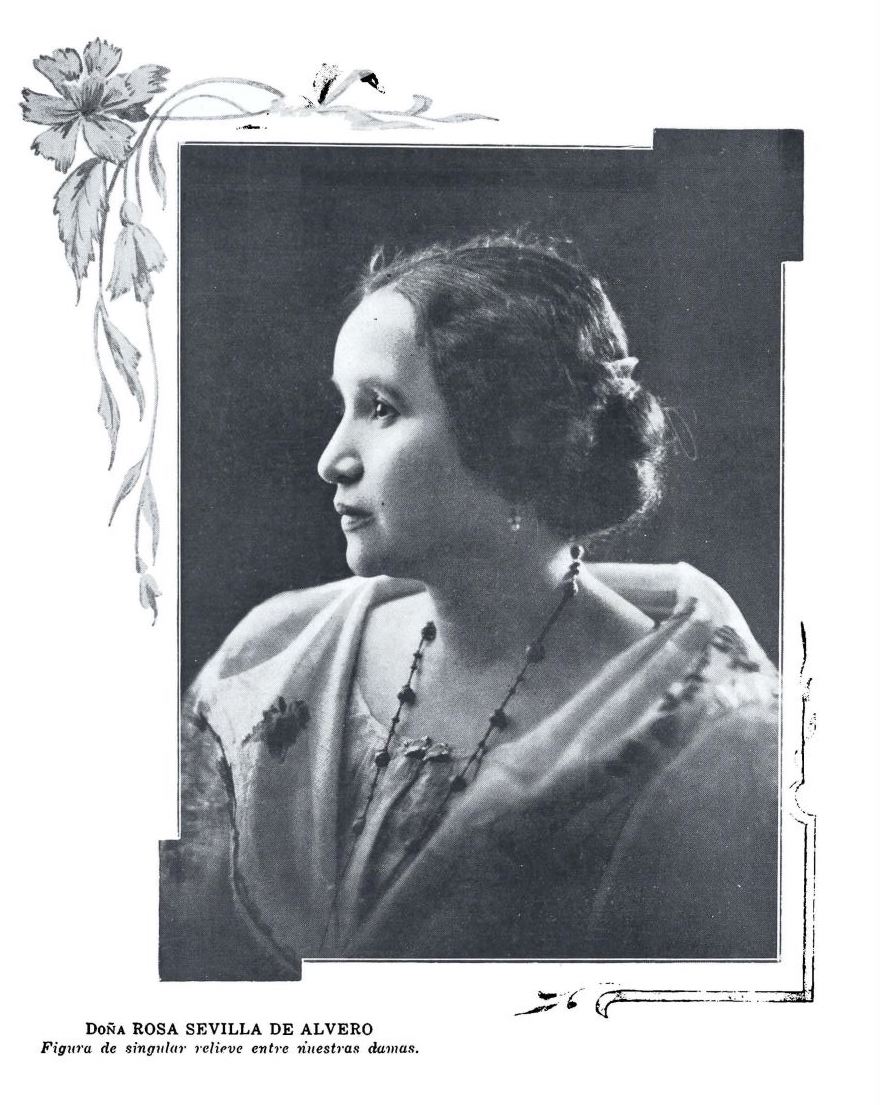
Important figures from Philippine culture |
Departing from these goals, we were able to define three main objectives: (1) the digitization of newspapers and creation of a repository, which joined other digitization projects already undertaken in the country such as at the University of Santo Tomás Digital Library, funded by Unibank, or the Filipinas Heritage Library Online carried out by Ayala Foundation (for more information on digitizing projects in the Philippines, see Ortuño Casanova and Sarmiento 2021). The project also facilitated the purchase of equipment, and trained library staff, as well as undertook the transcription of the materials; (2) the organisation of training courses in digital humanities for academic staff to exploit the digitised materials for distant reading; and (3) the organisation of an exhibition to bring these materials to the public.
The significance of our project lay in the importance of the documents for understanding and valuing Philippine history, especially at a time when anti-Ferdinand Marcos documents were being censored and the history of the period was being rewritten with alternative discourses. Therefore, the project not only encouraged a return to historical sources, but provided the means to undertake quantitative analysis of them. This was especially important to provide an antidote to the many historical hoaxes and fake news circulating in the media, in books and in society. Additionally, the digitised documents were important for researchers and audiences outside the Philippines: the use of first-hand materials can highlight the Eurocentric and hierarchical discourses used in colonial times and, by reflecting on them, help to avoid such biases in present-day research and societal discourse. The availability of such an archive is key to discussions of decolonisation in the Global North, as well as to counter resurrected narratives such as that going on in Spain in which the nineteenth-century idea of the benefits of colonisation, civilisation, and mestizaje is being repeated. In bringing all these documents into the public domain, we considered ways in which they could reach both, academics who could produce new knowledge from them, as well as the community, by asking such questions as:
What could the digitisation of Philippine documents contribute to the knowledge of Philippine history by locals and outsiders alike?
How could it help the re-appropriation of their own history, which was sometimes written in languages that are not widely known to the public and researchers?
One of the added values of digitisation, apart from bringing the materials in disparate locations together, was the possibility of automatic translation of the materials: the Philippines is a country with more than 130 official local languages, while much of the historical press is written in Spanish, English, and Tagalog. Although English and Tagalog are still spoken in most parts of the country today, the Spanish language died out in the Twentieth century, and therefore these newspapers, which are of great historical and literary interest, tend to be less consulted. Once digitised and transcribed, they can be translated, for at least an approximate understanding, thus returning them to importance in historical discourse as well as Filipino identity. Below are three samples of newspaper scans depicting minority groups in the Philippines, one from each historical period. Click on the dots in the embedded slider below, to see the scans from the Spanish, American and Independence periods:
| The above exhibit, impulsed by the Minority Narratives project, emphasises the decolonial use of the archive. Here, University of Antwerp PhD candidate Frances Cruz talks about her work on the Minority Narratives project. |
Challenges
Working on such a project in the Philippines created certain challenges. Philippine internet connection is one of the slowest in the world. This hindered our attempts in using Transkribus (an automatic transcription tool to create machine readable text). It also created problems with the repository, as high-resolution images took a long time to load for users, thus necessitating alternative ways of displaying newspaper images. Moreover, the project was set back by two other factors. The first was the COVID-19 pandemic, and the second was the imposition of European logic over the interests and needs as seen by Filipino teachers, scholars, and librarians.
The advent of COVID-19 meant that the planned physical exhibition was not able to take place, but it was launched in digital format which can be viewed on PhilPeriodicals (You can see the slider below for an impression). It offers a journey through various themes in Philippine history (literature, wars and revolutions, women and journalism, minorities in the Philippines, and the representation of Japan) with the newspaper as the primary source of knowledge. Each of these themes has its own sub-exhibition with several sections. These sections develop narratives that weave together examples taken from Philippine newspapers and magazines in various languages and underscore the importance of incorporating into the our writing and understanding of history the varied perspectives of the population, represented here by the languages in which they wrote and read. In addition, the exhibition incorporates digitised materials from other Philippine, American, or Spanish collections, not only from the repository created through this project. In this way it is possible to add important context while making links to other similar projects. In the physical version of the exhibition, which is planned to take place at the Ayala Museum in Makati, Metro Manila, we will provide a mechanism for the public to leave comments on the objects or to search for and incorporate others. We will also have computers in the exhibition room with instructions on how to search for villages or surnames in the newspaper repository. These activities can connect the public with their families' past through newspapers.
The second setback was less outward facing. Although the project was supported by the staff of the University of the Philippines who contributed ideas to the process, the needs analysis and action plan were drawn up by researchers from Antwerp, from where the money was also managed. Thus, we found that the library staff had different ideas about the priorities for use in a digital library: they prioritised the indexing of single articles over OCR. From our point of view, indexing a selection of articles was of little use: there was not an established criteria for the selection of which articles to index individually, and the indexers were doing their work without understanding the language of some of the periodicals that they were working with. We proposed instead the possibility of a word search of texts among other implementations that we, in the coordination, had wished for but did not get. The different visions for the use of the texts might have been anticipated.
On the one hand, there was a disciplinary breach. We intended to reach an agreement between users of the repository (e.g., the researchers) and librarians. However, I think that we as users were requesting features and giving examples that were far from the expertise of people working in the library. Coming to an agreement was compounded by the pandemic and the impossibility of traveling leading to difficulties in communication. Another factor may have been due to tensions in the ownership of the project as well as the hierarchy of perceived roles and authority that is common in many digital humanities projects (e.g., the researchers vs the alt-ac contributors). Despite the discrepancy in expectations, one of the most important contributions of the project was in the purchase of scanners and the training of librarians in using them so that they could continue to digitize bibliographic material beyond the project period. Another unexpected difference in expectations occurred as the project progressed in that the Belgian team observed that the interests of Filipino/a researchers involved in digital methodologies were more interested in the study of contemporary media and social networks than in the exploitation of historical newspapers and literary materials as we were in Antwerp. Thus we needed to adapt our teaching plans and expectations regarding the use of the repository. In the following video, more considerations of the project are presented.
|
Project PI Rocío Ortuño Casanova details the questions the team had to wonder about after designing the project. |
Conclusion
Despite these setbacks, the project met its goals and has produced a unique repository that is used both by academics and the public. The training courses developed have been used and reused, and much to our gratification, several Filipino professors are now teaching Digital Humanities in various universities throughout the country, and at least three of our former students are pursuing PhDs related to Digital Humanities in universities in Europe and the United States. Despite, or perhaps because of the setbacks, for the collaborating teams, the knowledge exchanged was as valuable as the repository created, making us all aware of unspoken assumptions and posiotionalities, which can become a barrier to collaboration and cooperation.
Author Bio*:
María del Rocío Ortuño Casanova is an Assistant Professor at the UNED (Universidad Nacional de Educación a Distancia), while she continues to be affiliated to the ACDC research group at the University of Antwerp. She has held a María Zambrano visiting researcher position at the University of Alcalá (2022-2023), and has previously worked at universities in Belgium, the United Kingdom, and the Philippines. Her research interests focus on 20th-century Spanish poetry, the intersections between literature and music, and literary and cultural relations between the Philippines and the rest of the Spanish-speaking world. She is the principal investigator of the European project “DigiPhiLit” on Philippine literature, digital humanities and distance learning.
Designer Bio*:
Anna Villarica is a research assistant on the #dariahTeach project. She is a junior lecturer at Maastricht University currently teaching courses on design thinking, digital transformations, the philosophy of technology, research skills, and museology. She received her MA in Media Studies Digital Cultures from Maastricht University and her BA in Communications and New Media from the National University of Singapore. While she does not specialise in anything (yet), she loves all things digital and is always learning and creating.
*Bios and affiliations are accurate at the time of writing