

Unit II: Ethics, Legal and Moral Frameworks
2.6 Indigenous Data Sovereignty and the Researcher’s Responsibilities
 |
This case study is written by Professor Naomi Adelson. The page is designed by Felix Bui.
 In Canada, we are working to address the history and ongoing contemporary impacts of the colonisation of Indigenous peoples and nations. Addressing these impacts and moving towards decolonisation takes many forms. Access to and control of all research data is one of many acts of decolonisation. Far more than a matter of asserting rights of ownership over cultural materials or ideas, data ownership represents a strong and dynamic connection between empowerment, cultural continuity, social cohesion, and resilience. A historically exploitative and “extractive” industry (Kovach 2005, 2010), research practices have a far too long history of inequity characterising Indigenous/non-Indigenous relations.
 The management of research data is a particularly pressing issue for Indigenous leaders, scholars, and communities[1], given the vital connection between data and self-governance. The control of research materials is a foundational assertion of Indigenous nations’ and communities’ rights, including rights of ownership (FNIGC 2007). The misappropriation of cultural knowledge and problematic usage of Indigenous research data has further spurred Indigenous peoples, communities, and their allies to advocate for and advance the development, application, and implementation of research principles, protocols, and best practices as a means of establishing and rigorously reinforcing transparent and ethical standards in Indigenous research data management. And, as open access and research data management are becoming necessary components of research activity (see for example, Canada’s Tri-Agency Research Data Management Policy), there is the concomitant need to ensure that historical inequities do not similarly emerge in contemporary data management practices.
| Source: Informed by British Columbia First Nations Data Governance Institute - BCFNDGI.COM USINDIGENOUSDATA.ORG @USIDSN GIDA-GLOBAL.ORG @GidaGlobal |
This case study offers an entry point to explore what Indigenous data sovereignty means in relation to research and creative practices. In exploring these issues, I hope that it helps you further understand our collective responsibility as researchers and scholars to the communities and individuals with whom we work.
The case study is based on my own research and my navigation of the scope of considerations in Indigenous data management and sovereignty. I invite you to examine the possibilities, as well as the challenges, in establishing and following the highest standards of ethical, transparent, and sustainable principles and practices of data management toward ensuring Indigenous data sovereignty.
What is Data Sovereignty?
Indigenous data sovereignty (IDSOV) is an assertion of Indigenous jurisdiction over all data about First Peoples, including information held by non-Indigenous governments and institutions. The global movement for Indigenous data sovereignty affirms the inherent right of Indigenous peoples to control how information about them is managed, accessed, and preserved (Carroll et al., 2020; FNIGC, 2014).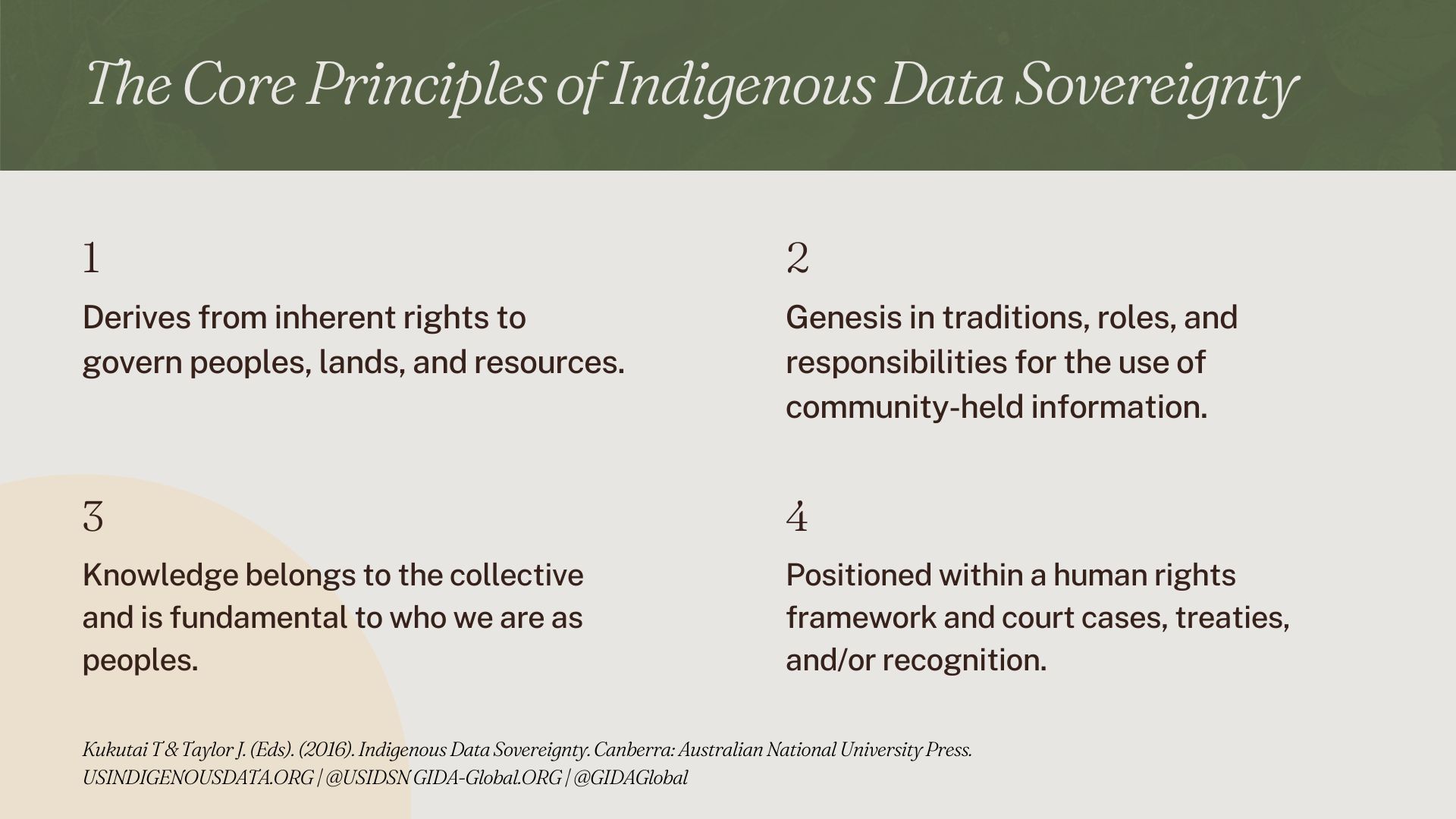 |
The international Indigenous data sovereignty movement, which includes networks such as the Global Indigenous Data Alliance (GIDA) and intellectual property initiatives such as the CARE Principles for Indigenous Data Governance and Traditional Knowledge (TK) and Biocultural (BC) labels, offers comprehensive guidelines to assist in the implementation of Indigenous data sovereignty. In Canada, the OCAP® principles, outlined below, are the best known and while these principles generally apply as well to the Inuit and Métis Nations, these nations have developed their own research data management protocols (See for example, the National Inuit Strategy on Research).
Why is Indigenous Data Sovereignty Important?
-
Indigenous Nations and Communities
Indigenous peoples are the ultimate authority of their own data and possess the inherent right to control information about themselves. Whereas research practices have, in the past, varied from ethically sound to unmitigatedly exploitative, few considered matters of ownership and access in research agreements. Communities are now spelling out the terms of research engagement, including data ownership, usage, storage, and access as an inherent part of any research project. See for example: Indigenous Knowledges & Data Governance Protocol.
-
Researcher
Basic Principles
OCAP® and CARE principles and values are the de facto current standards of research engagement, and are shaping, refining, and re-defining ethically sound research with Indigenous populations in Canada. The principles of Ownership, Control, Access and Possession/Stewardship, in particular, affirm First Nations’ control of data collection processes and that they own and control how this information can be accessed, used and stored (FNIGC 2019; First Nations Centre 2007). In Canada there are a range of data sovereignty initiatives being undertaken by First Nations, Métis, and Inuit researchers, research organisations, and governments. As noted above, best known is OCAP® which was created in 1995 as a set of foundational principles to guide the standardisation of the processes for First Nations’ ownership and control over data, including its collection, access, use and storage. As a political and practical response to the use of data in reproducing colonial relations, the OCAP® principles assert Indigenous sovereign research data governance (Schnarch 2004; FNIGC 2014a, b; Espey 2002; First Nations Indigenous Governance Centre 2007).
“The First Nations principles of OCAP® establish how First Nations’ data and information will be collected, protected, used, or shared. Standing for ownership, control, access and possession, OCAP® is a tool to support strong information governance on the path to First Nations data sovereignty. Given the diversity within and across Nations, the principles will be expressed and asserted in line with a Nation’s respective world view, traditional knowledge, and protocols.” https://fnigc.ca/ocap-training/
The CARE principles of Collective Benefit, Authority to Control, Responsibility, and Ethics were developed by the International Indigenous Data Sovereignty Interest Group. Working “in consultation with [international groups of] Indigenous Peoples, scholars, non-profit organisations, and governments, the CARE principles were developed to be people- and purpose-oriented, reflecting the crucial role of data in advancing innovation, governance, and self-determination among Indigenous Peoples. The Principles complement the existing data-centric approach represented in the FAIR Guiding Principles for scientific data management and stewardship (Findable, Accessible, Interoperable, Reusable)” (Carroll et al 2020; see also Kukutai & Taylor 2016)[2].
From Principles to Practice
OCAP® was developed as “principles in evolution” rather than a “set of rules” or practices and with the understanding that there may be ambiguities or limitations in its application (FNIGC 2007). The overarching goal of OCAP®is to be as straightforward and transparent as possible, working towards a collaborative framework that adheres to “a Nation’s respective world view, traditional knowledge, and protocols” (FNIGC 2014). Moving from principles to practice is critical, however, and requires considerable attention to the specific details of a given research project.Moving from principles to practice offers researchers an opportunity to collaboratively develop an appropriate data management framework. The framework may be very straightforward, involve few consultations, and provide a clear path to ensuring a community’s priorities and protocols have been met. Researchers must nonetheless be aware of potential challenges or mitigating factors that will emerge in the process of moving from principles to practice.
In moving from principles to practice, in other words, are we actively rethinking the standards of research engagement with our collaborators and research partners. When initiating a project, the researcher must collaboratively and transparently ensure the implementation of best practices in the management of research materials. And, when research was completed long before Indigenous data sovereignty principles and guidelines were established, researchers should consider how to update their research agreements in order to implement data sovereignty best practices.
 Case Study: The original project, digitisation, and ownership transfer planning
 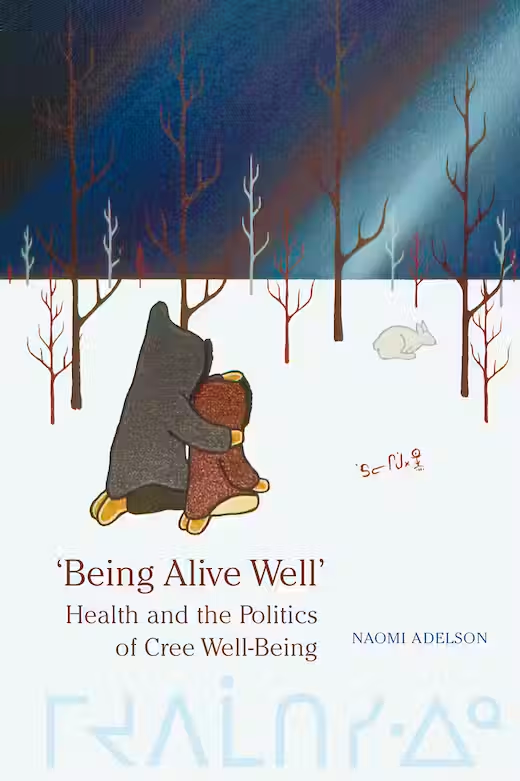 I began working with the Whapmagoostui First Nation (WFN) in the late 1980s. The WFN are Iiyiyu, or Cree, of Iiyiuyu Istchee - the peoples’ land - whose community is located on the Hudson Bay coast just north of the 55th parallel in Nunavik (northern Québec), Canada. After receiving permission to conduct a research project on the concept of health from an Iiyiyu perspective (see Adelson 2000 and Adelson, Mickelson, Kawapit 2021), I spent 18 months living in the Whapmagoostui community and, with the help of two translators, interviewing unilingual Cree-speaking elders. This research resulted in the publication of Being Alive Well: Health and the Politics of Cree Well-Being (U Toronto Press 2000) and its impact was realised, in particular, in the transformation of the language and practices of health care communication at the Cree Board of Health and Social Services of James Bay (see Shrivastava et al 2020 and Miyupimaatisiiun Department).
 Decades later, on reviewing the richness of the detail in the narratives recorded and their transcriptions and in light of my commitment to Indigenous data sovereignty, I could neither destroy nor leave the research records unattended in a filing cabinet drawer. Bringing this issue to the attention of the then-Chief of the WFN, we began to develop a plan for digitising, transferring ownership, and archiving those records.
Before any of the material could be transferred to the community, it had to be available in an accessible format. I had tape recordings, printed transcripts, and photographic slides. The paper records would not survive into the future and, in storage, were not organised in a coordinated fashion with the corresponding recordings. As well, the various tape recording devices I had used at the time - and the disks on which the transcripts were stored - were now obsolete. The organisation of the materials, digitisation, and creation of a systematic overarching organisation structure required the skills of a digital archivist (see Adelson, Mickelson, Kawapit 2021 for a summary of the process). Samuel Mickelson, the digital archivist who was brought on to the project, ensured that we created a clear, accessible, and catalogued data set, with the requisite preservation master, accessible files and clear metadata.
| Learn more about the goals, ethical frameworks, process, and results of the Miiyupimatisiiun Research Data Archives Project. |
An example of the digitisation process includes images from A Fur Trader’s Photographs (1985), a snippet of the interview text in which the book was being discussed, and my original indexing notes in parentheses.
| Click on the audio icon on the image to listen. |
With digitisation completed, the next step was to begin the process of facilitating access to - and local preservation of - the now accessible materials. Unfortunately, the COVID pandemic, and the travel-limiting protocols which necessarily ensued, slowed this progress. We have begun to get back on track - recognising that any number of contingencies must be included in research - and research management - planning.
In future meetings with community representatives, we will discuss the development of a data transfer protocol and access plan. The discussion of access will begin with a review of the original consent form details, including how the interviews were originally meant to be used. As general access to the interviews was not consented to in those original forms, the community will determine whether I will need to contact family members of the original participants or if the WFN has the authority to make the decision regarding opening access beyond the requirements of the original project. Once that issue is resolved, we will then be able to discuss community and research access protocols, including whether all materials will be available to all members of the community or if any limitations will be set. This will also necessarily entail a discussion of whether there is a need for a content management system (CMS) to facilitate modifiable access. Finally, we will take into consideration the infrastructure needs, including how and where to house the data, who will manage the access, and if there are any long-term concerns regarding updates and future technologies.
 |
|
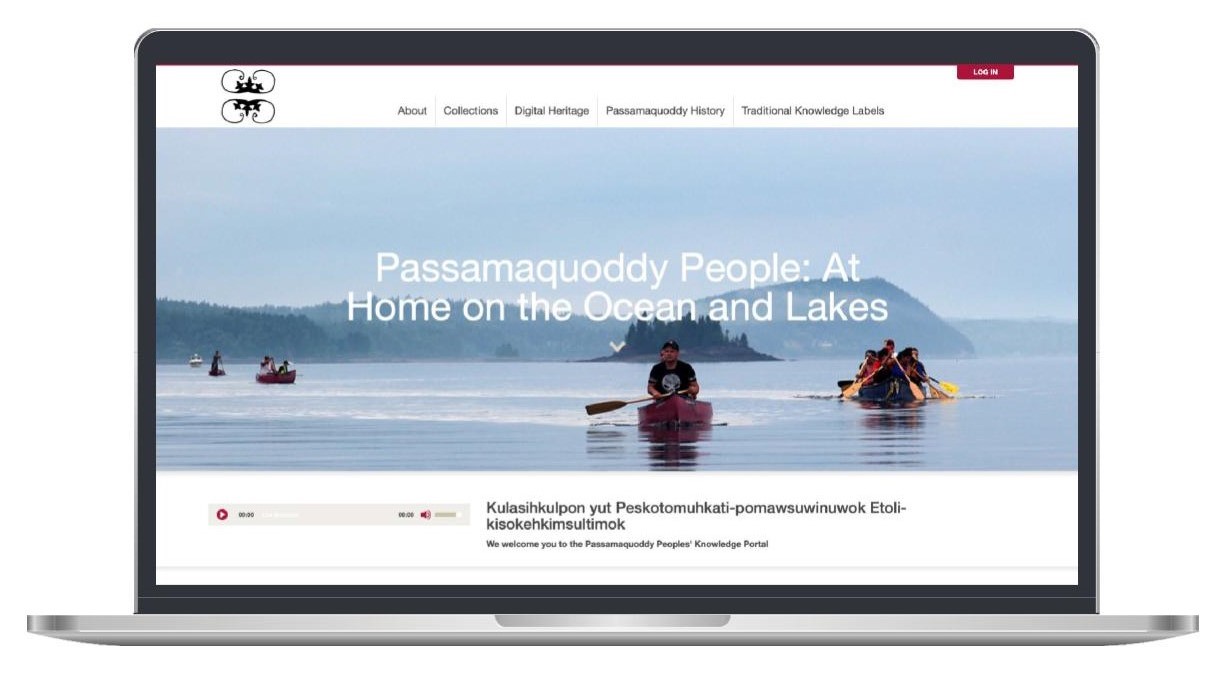
The Passamaquoddy Mukurtu site. Image retrieved from https://passamaquoddypeople.com. |
I would like to note that with regard to the last point above, intellectual property (IP) rights originally ensured that I am the owner of my own research. In other words, IP rights privilege individual ownership and tangible heritage: I own what I write (until such time that my ownership shifts to public domain access). In practice, however - and in particular in the context of working with an Indigenous nation and community - these IP rights effectively complicate my ability to transfer that ownership to the WFN community. In order to ensure their ownership of what is currently “my” research (but, in truth, the community members’ own narratives), I will work with the WFN to draw up a memorandum of understanding which will outline the community’s rights to that intellectual property.
Memoranda of Understanding are becoming more common as Indigenous communities and researchers work to address the limitations of intellectual property rights and establish more suitable terms of ownership and access.
I will continue to work with the WFN to develop a memorandum of understanding and to collaboratively implement it towards a transfer of ownership as well as the transfer of all of the digitised data and their use, control and storage as they see fit.
Acknowledgements
-
Whapmagoostui FN, past Chief Louisa Wynne, Joshua J Kawapit, Culture & Communications Officer
-
Samuel Mickelson
-
Dr. Christianne Stephenson
-
Toronto Metropolitan U Library Collaboratory: Fangmin Wang, Sally Wilson, Cristina Pietropaolo, Simon Ly, and Kelsey Myler
-
Toronto Metropolitan U Archives and Special Collections: Alison Skyrme and Curtis Sassur
-
The archiving project has been funded by the Office of the Vice President, Research & Innovation, Toronto Metropolitan U
 Exercise: Questions for Consideration
- What is Indigenous data sovereignty and why is it historically important?
- What are the core principles of Indigenous data sovereignty?
- What can researchers do to ensure the application and implementation of principles, protocols, and best practices in the management of research materials when working for and with Indigenous communities? How do you think this changes research planning processes?
- What is an example of a best practice in conducting research with Indigenous peoples?
- What is an obstacle that a researcher might encounter in ensuring appropriate data management? How would you resolve that obstacle?
- Are you willing to transfer or share ownership of your research materials with a community or organisation? What would this look like?
Footnotes:
[1] Communities are defined, as per Chapter 9 of the TCPS, as “a group of people with a shared identity or interest that has the capacity to act or express itself as a collective…including communities of interest” (https://ethics.gc.ca/eng/tcps2-eptc2_2018_chapter9-chapitre9.html#a, accessed 13/10/22).
[2] The CARE principles build upon earlier work by the Te Mana Raraunga Maori Data Sovereignty Network, US Indigenous Data Sovereignty Network, Maiam nayri Wingara Aboriginal and Torres Strait Islander Data Sovereignty Collective, and numerous Indigenous Peoples, nations, and communities. The goal is that stewards and other users of Indigenous data will ‘Be FAIR and CARE.’
Author Bio*:
Naomi Adelson (she/her) is Professor and Associate Vice President, Research and Innovation at Toronto Metropolitan University (Canada). She is a medical anthropologist with a 30+ year research career with the Iiyiyu’ch of Whapmagoostui First Nation, in Iiyiyu Istchee (northern Québec). In addition to this data transfer project, she is currently exploring the history of a nurse who worked in Whapmagoostui/Kuujjuarapik in the Cold War period.
Designer Bio*:
Felix Bui is currently a junior lecturer at the Faculty of Arts & Social Sciences at Maastricht University. She teaches courses about the history and development of AI, the philosophy of technology, and research skills. She holds a master’s degree in Media Studies: Digital Cultures and a background in Marketing & Communication. Her research interest involves AI and creativity, mediatization and media representation of queer communities, data and media ethics with a focus on diversity and inclusivity.
References
- Anderson, J. (2011). Protocols and Guidelines for Ethical Engagement with Indigenous and Local Communities. World Intellectual Property Organization briefing for Estée Lauder. https://static1.squarespace.com/static/55cfbe2de4b02774e51fac68/t/5614a952e4b0efb3f6417d8b/1444194642219/Estee+Lauder_Protocols.pdf
- Adelson, N. and Mickelson, S. (2022) "The Miiyupimatisiiun Research Data Archives Project: putting OCAP® principles into practice", Digital Library Perspectives, Vol. 38 No. 4, pp. 508-520. https://doi.org/10.1108/DLP-11-2021-0099
- Adelson, Naomi, Mickelson, Samuel et Kawapit, Joshua J. (2021) "The Miiyupimatisiiun Research Data Archives Project: Co-developing an Indigenous Data Repository". KULA 5, no. 1: 1–6.
- Center for Digital Scholarship and Curation. (n.d.). “Welcome Mukurtu CMS 2.1: A Safe Keeping Place.” https://mukurtu.org
Federal Agencies Digitization Guidelines Initiative. (2009). Digitization Activities: Project Planning and Management Outline. http://www.digitizationguidelines.gov/guidelines/ DigActivities-FADGI-v1-20091104.pdf - First Nations Centre. (2007). OCAP: Ownership, Control, Access and Possession. Sanctioned by the First Nations Information Governance Committee, Assembly of First Nations. Ottawa: National Aboriginal Health Centre. https://www.afn.ca/uploads/files/education/18._2007_ april_fnigc_ocap_information_resource.pdf
- First Archivist Circle. (2007). Protocols for Native American Archival Materials. http://www2. nau.edu/libnap-p/protocols.html
- Howell, R.G. & Ripley, R. (2009). The Interconnection of Intellectual Property and Cultural Property (Traditional Knowledge). In Protection of First Nations Cultural Heritage: Laws, Policy, and Reform. Catherine Bell and Robert K. Paterson eds. Vancouver: UBC Press.
- Lovett, R., Lee, V., Kukutai, T., Cormack, D., Carroll, S.R., & Walker, J. (2019). Good Data Practices for Indigenous Data Sovereignty. In A. Daly, S.K. Devitt, & M. Mann (Eds.), Good Data (pp. 26-36). Institute of Network Cultures.
- McGill, D, Two Bears, D., Woods, J., & the Research Ethics and IP Working Group. (2015). Collaborative Projects and Memoranda of Agreement (MOA). Intellectual Property Issues in Cultural Heritage Project. https://www.sfu.ca/ipinch/sites/default/files/resources/fact_sheets/ ipinch_moa_factsheet_jan2015.pdf
- McGovern, N. & K. Smith. (2019). “Digital Preservation Management Workshop” [slide deck]. Ithaca, NY and Cambridge, MA: Cornell University and MIT Libraries.
- United Nations. (2008). United Nations Declaration on the Rights of Indigenous Peoples.
https://www.un.org/esa/socdev/unpfii/documents/DRIPS_en.pdf