

Unit III: Social Justice in Digital Humanities Practice
3.5 Queerlit: Queer literature and knowledge organization
This case study is written by Jenny Bergenmar and Arild Matsson. The page is designed by Felix Bui.
Introduction
 One of the most important tools for knowledge organization is descriptive metadata. Descriptive metadata can be added to multiple media formats in different contexts: libraries, archives, and museums for instance. It makes it possible for library users to find not just the title or author of a book, but also what the book is about. The descriptive metadata in institutions is usually some kind of controlled vocabulary – a standardized set of terms or phrases used to index content in a consistent way to make it easier for users to find and retrieve content. For libraries, a well-known vocabulary is Library of Congress Subject Headings (LCSH), used to index literature in library catalogs in the United States, but also mapped to subject headings systems in other languages. However, controlled vocabularies, such as LCSH, that offer universalized and authorized terms, have been proven to fail to represent marginalized groups adequately.
One such group is the LGBTQ+ community. There is a long tradition of what Cait McKinney has called “information activism” in this community (McKinney 2020), building resources that facilitated access to relevant materials long before any digital infrastructures. Part of this information activism has also been efforts to change inadequate, pathologizing, and discriminatory terms included in LCSH. In general descriptive systems such as the LCSH, there are different issues, ranging from underrepresentation to misrepresentation in descriptive terms. The situation is similar in controlled vocabularies in other languages used in libraries, but LCSH also has an impact on other national systems, since terms are often mapped from these systems to LCSH. Building on the traditions of information activism in the LGBTQ+ community, separate indexing systems for LGBTQ+ materials have been developed, such as the Homosaurus, an English-language linked data vocabulary, intended to function as a companion to broad subject term systems to make it easier for users to find LGBTQ+ related materials.
In the project Queerlit: Metadata Development and Searchability for LGBTQI[1] Literary Heritage, the purpose is to create a bibliography of Swedish LGBTQI literature, a Swedish language vocabulary to describe this material, and an interface to make it easier for users to find the subjects they look for. In Sweden, the metadata system used in the National Union Catalog (Libris) is called Swedish Subject Headings (SAO). In it, the terms describing LGBTQI experiences and identities are few and broad. For example, only the general term ‘transgendered people’ exists, while more specific ones such as ‘trans men’, ‘trans women’, or ‘transitioning’ are absent. The Queerlit project developed a thesaurus, QLIT, for the topical description of LGBTQI literature. A thesaurus is a list of terms, which also includes references to preferred and related terms. It is most often organized as a hierarchical structure. QLIT is used in the Queerlit bibliography. Both the Queerlit bibliography and the QLIT thesaurus are interventions into the Swedish National Union Catalog (Libris), utilizing the possibilities of linked data. Linked data makes it possible to use an external resource, such as QLIT, in the library system. This means that the Queerlit bibliography and the QLIT terms are accessible in Libris web search, as well as through the interface developed by the project.
We have chosen to work with fiction and not non-fiction because fiction is usually indexed to a lesser extent. The subject indexing of fiction in libraries is usually limited to genre, complemented with facets of time and place. Libraries seldom have the resources to index fiction more comprehensively, since it involves meaning-making at another level than non-fiction, including metaphors, intertexts, and themes that are abstract rather than manifest. At the same time, fiction is central to the collective history of LGBTQ+ people. It reflects societal values, as well as individual experiences of sexuality and gender identity. Disenfranchised groups, like LGBTQ+ people in history, often leave a lack of historical sources behind, especially narrations told from their perspective. In that light, literature is a particularly crucial source for understanding the prejudices, oppression, and violence that has affected this group, and also for the understanding of subjective LGBTQ+ experiences.
In this video, Jenny Bergenmar explains how the Queerlit project has worked with transformative metadata, and how the QLIT thesaurus has been developed and used in the Queerlit bibliography.
Impact in practice
Besides increasing the general level of indexing of literary works, the result of indexing with QLIT is that LGBTQ+ literature is made visible and searchable in different ways: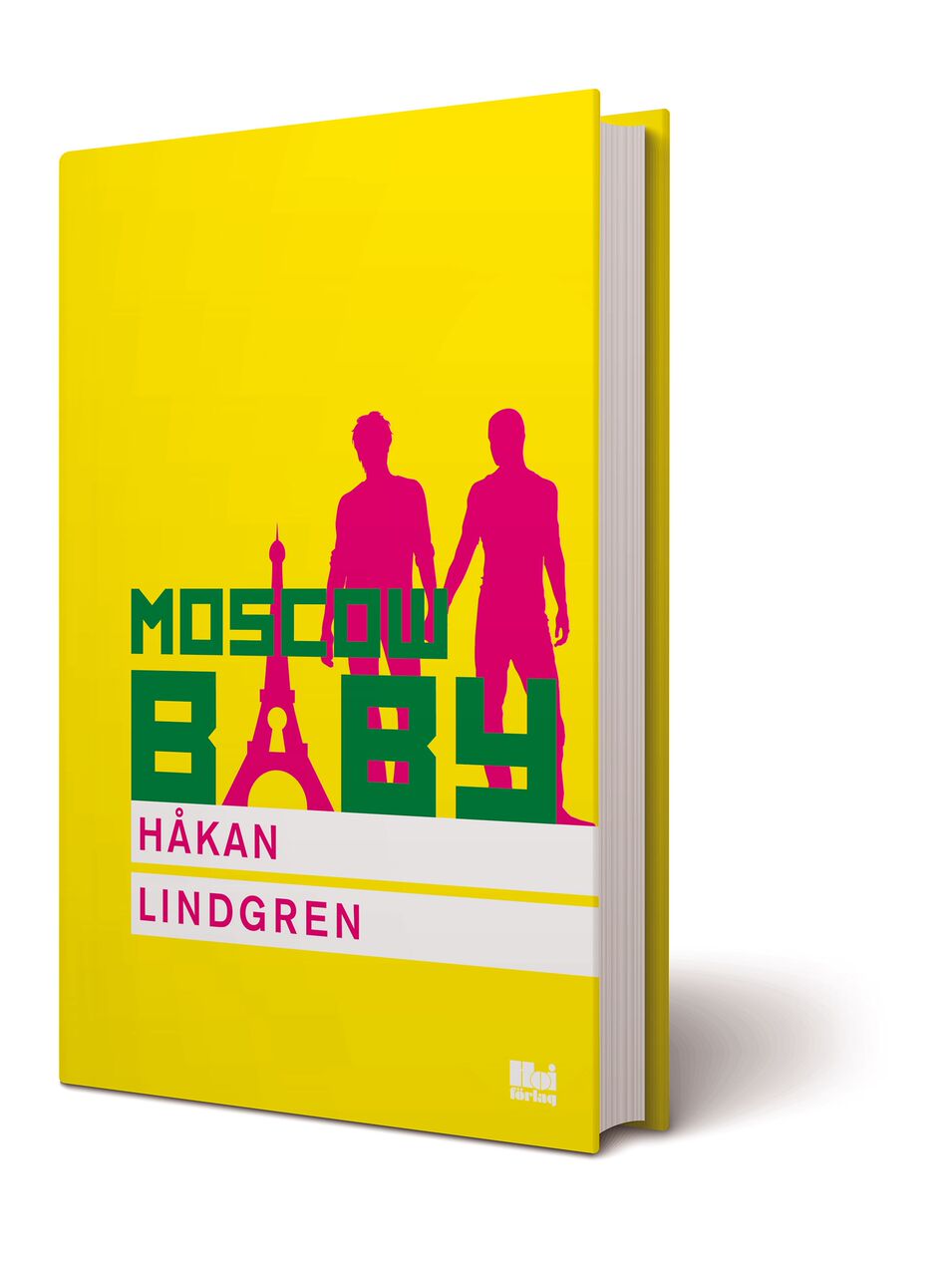 Precise subject terms
More specified terms make more precise searches possible. The novel Moscow baby by Håkan Lindgren (2017) is about a male couple who become parents with the aid of a surrogate mother. The terms “surrogatmödrar” (surrogate mothers), and “homosexuella män” (homosexual men) were available in (SAO). The QLIT terms “Skaffa barn (HBTQI)” (having children), “Bögar” (gay men), “Bisexuella män (bisexual men), and ”Surrogatskap” (Surrogacy) were added. As well as making it visible that the book is not only about homosexual men, but also about bisexual men, these terms also make it possible to search for all books about LGBTQI persons having children, or to narrow it down to homosexual men having children, or to search for LGBTQ+ books including surrogacy. Major and minor motifs
The indexing of titles with main LGBTQ+ motifs and characters, as well as titles where LGBTQ+ motifs and characters are more peripheral means that many more titles can be made searchable. That motifs and characters are peripheral is indicated in the metadata itself so that the user can easily see if non-normative gender identities or sexualities are a main theme or only mentioned in passing. Many of the titles also have descriptive text specifying the reason for its inclusion. One example is Viktor Rydberg’s short novel Singoalla (1857). As is the case in older literature generally, there is no explicit representation of same-sex love. However, there are both symbolic elements and a platonic idealization of young male bodies. Like most literary works, Singoalla had a basic indexing in the National Union Catalog with terms for genre, “Romaner” (Novels), and “Kärleksskildringar” (Love stories). The following terms QLIT terms were added: “Antik symbolik (HBTQI) – perifert” (classical antiquity symbolism LGBTQI – peripheral), “Begär (HBTQI) – perifert” (desire LGBTQI – peripheral), and “Svärmisk vänskap – perifert” (romantic friendship – peripheral). The addition of LGBTQI in the term itself serves to avoid overlapping terms. “Begär (HBTQI)” (desire LGBTQI) indicates that this term should be distinguished from the term “Begär" (Desire) in SAO that can be used generally. The inclusion of “perifert” (peripheral) in the term serves as a transformative metadata practice, moving beyond the usual practice of only indexing major themes or characters, and in this way capturing queer characters or actions that are marginal in literary history. The basis of the inclusion of the work and the indexing with the QLIT terms is previous research that has included the author in a queer literary canon and describes the classical symbolism and the same-sex desire.Symbolism
The creation of terms for symbolism may function as a new path into a queer literary tradition, capturing more elusive queer characters and actions, and making it possible to compare the use of metaphors over time. The term “Spegelsymbolik (HBTQI)” (mirror symbolism LGBTQI) connects texts in different genres from the early twentieth century until today.One benefit of open-linked vocabularies is that mapping between different systems also allows the user to trace descriptive links across different resources. QLIT is mapped to the Homosaurus, the largest LGBTQ+ linked data vocabulary, and through this mapping users interested in specific topics relevant to LGBTQ+ cultural heritage can use the same terms to search materials across institutions and media types.
Hierarchical term search
As QLIT is hierarchically organized, an important feature of the search interface is the possibility to search for broad terms and retrieve works indexed with narrower terms. For example, a search for the QLIT term “HBTQI-ungdomar” (LGBTQI youth) will include the novel När jag åker hem (When I go home, 2022) because it has been indexed with the QLIT term "Unga lesbiska" (Young lesbians).Developing the search interface
In the project, two surveys were carried out, one directed towards general readers and one towards librarians. They both showed that the web search functionalities of Swedish library catalogs, including Libris, were unsatisfactory. While the Libris user interface is out of our control, the underlying database is open for public use through an Application Programming Interface (API). The database has great searching capabilities, and its API exposes them to external applications.The Queerlit interface is built as a web browser application that connects to the Libris database. It translates user input to a query for the API, and then displays the results. This way, Queerlit can leverage the database already developed by Libris, who, on their end, has been an active partner in the project. In several cases, they have been able to develop features for the API to support new use cases.
Our envisioned users span a spectrum from laypeople to researchers. The user interface needs to be unintimidating and inviting to new users. Many of them will not be familiar with all the concepts that are present, such as subject headings, genre keywords, and histograms. We still want them to quickly find and understand how they can use the interface for their benefit. This is true for any user interface, but some expert applications can expect most users to arrive with a clear goal in mind and a willingness to spend some time learning. In consideration of these users, features that require a little more engagement should also be close to hand.
| Video: Queerlit Search Interface |
Since Queerlit is a part of Libris, it has the benefit of being integrated into a large, national library infrastructure, and the literature in Queerlit is visible among all other literature that is searchable in Libris web search. The benefit of the interface developed by the project, on the other hand, is that it builds on specific user needs and domain-specific expertise and that it makes use of the terms in the QLIT thesaurus to help users more easily access literature on specific topics. In this way, the interface is one way of "working that validate[s] local experiences of data without removing from a more global network of information exchange" (Rawson & Munoz 2019).

Exercise: Questions for further discussion
Footnotes:
[1] LGBTQI is used when referring to the Queerlit bibliography, not as to limit the spectrum, but as a description of what the database actually covers.
Author Bio*:
Jenny Bergenmar is a professor of Comparative Literature at the University of Gothenburg, Sweden. She has previously worked with gender and literary history, digital scholarly editing, and archival materials through digitization and crowdsourcing. She is currently PI of the research infrastructure project Queerlit Database: Metadata Development and Searchability for Lgbtqi Literary Heritage (2021–2023).
Arild Matsson (he/they), MA in Language Technology, is a research engineer at Språkbanken Text and the Gothenburg Research Infrastructure in Digital Humanities (GRIDH), both located at the University of Gothenburg. Arild specializes in web development, user interfaces and text data and has developed the Queerlit search interface. He cares about code quality, the FAIR principles and accessibility.
Designer Bio*:
Felix Bui is currently a junior lecturer at the Faculty of Arts & Social Sciences at Maastricht University. She teaches courses about the history and development of AI, the philosophy of technology, and research skills. She holds a master’s degree in Media Studies: Digital Cultures and a background in Marketing & Communication. Her research interest involves AI and creativity, mediatization and media representation of queer communities, data and media ethics with a focus on diversity and inclusivity.
*Bios and affiliations are accurate at the time of writing.
References
- Adler, M., Cruising the Library. Perversities in the Organization of Knowledge, New York: Fordham University Press, 2017
- Bailey, Moya. Anne Cong-Huyen, Alexis Lothian, and Amanda Phillips, “Reflections on a Movement: “TransformDH, Growing Up,” in Debates in the Digital Humanities, eds. M.K. Gold & L.F. Klein, University of Minnesota Press, 2016, https://dhdebates.gc.cuny.edu/read/untitled/section/9cf90340-7aae-4eae-bdda-45b8b4540b6b#ch08
- Campbell, G.D., “Queer Theory and the Creation of Contextual Subject Access Tools for Gay and Lesbian Communities.” In Feminist and Queer Information Studies Reader, edited by P. Keilty & R. Dean, 290-308. Sacramento: Litwin Press, 2013.
- Cifor, M. & Rawson, K.J., “Mediating Queer and Trans Pasts. The Homosaurus as Queer Information Activism.” Information, Communication and Society, May 2022: 1–18.
- Drabinski, E., “Queering the Catalog: Queer Theory and the Politics of Correction,” The Library Quarterly 83(2) 2013: 94-111.
- Homosaurus, https://homosaurus.org/
- McKinney, C. Information Activism. A Queer History of Lesbian Media Technologies. Durham & London: Duke University Press, 2020.
- Rawson, K. and T. Muños. “Against Cleaning.” In Debates in the Digital Humanities, edited by Gold M. K. & L.F. Klein. Minneapolis & London: University of Minnesota Press, 2019. https://dhdebates.gc.cuny.edu/read/untitled-f2acf72c-a469-49d8-be35-67f9ac1e3a60/section/07154de9-4903-428e-9c61-7a92a6f22e51#ch23
- Ruberg, B., J. Boyd & J. Howe, “Toward a queer digital humanities,” Bodies of Information. Intersectional Feminism and the Digital Humanities, eds. E. Losh & J. Wernimont, University of Minnesota Press, 2018.