

5.4 Document
5.4.1 Specifications
 |
In order to have a design implemented, other people will have to do many things. For producing an exhibition, for example, the website must be made, the exhibit built, the catalog put into production, and so on. Documentation is needed that explains what is to be made, and what needs to be done. The issue is that often the design is implemented by many different people, who are unaware of the context and the full design. Consequently, precise and unambiguous specifications become necessary.
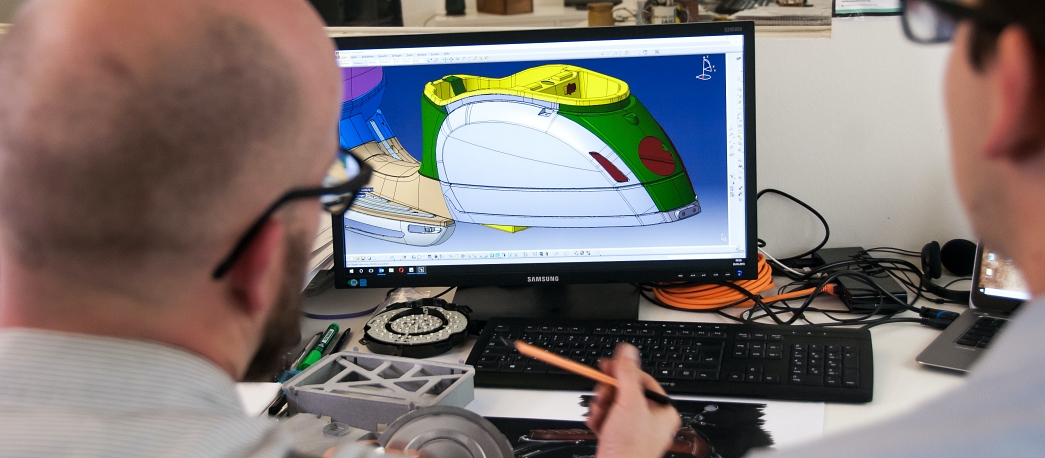
Product and building specifications are detailed descriptions of the design and materials used to make it. The sets of specifications include bills of materials, technical drawings, and production requirements. When it concerns services, the service specifications are written guidelines that clarify all the requirements and objectives of each specific stage of the service experience and touchpoints. For exhibitions, the specifications include floorplans, detailed technical drawings of individual exhibits, and graphical designs of the information shown. Each practice has its specific ways to document, and it requires training to read and interpret them. For example, technical drawings have standards on what is shown, the views and cross-sections, the line thickness, patterns, dimensions, scale, and so on.
The inclination of many inexperienced designers is to over-specify a design to ensure ‘the right thing’ is done and everything is clear. In this case, over-specifying means being too precise or adding too much information. As engineers know fully well, being too precise makes things unnecessary elaborate. For example, if you want to connect two parts with a bolt and a nut, you can specify a bolt with a length of approx. 45 mm, or a bolt of 45 +/- 0,5 mm. Those who are responsible for production know that bolts of 45 mm are rare and costly, and 50 mm is a regular size. However, the second specification disables this, whereas possibly the designer wouldn’t care if a 50 mm bolt was used instead. Overly precise specifications are omnipresent inside control-oriented organizations, where even the simplest kind of activities are ‘regulated’.
Too many specifications almost always result in unwanted contradictions. You specify many details, but at a higher level; it proves to be impossible to meet all the requirements. For example, fire safety requirements may effectively imply specifying ‘class 5’ fire-retardant materials. Yet these are not allowed by the environmental requirements, as these materials include eco-unfriendly additives. Engineers are trained to carefully consider what should be included and excluded in the specifications. Furthermore, they organize specification review sessions in order to limit the risk of over-specification. This critical review of your own design is often lacking in other practices.