

2.1 Mind the Gap - or Is There Really One?
2.1.9 Making Strange / Making Sense
 |
User involvement and user friendliness are core concepts in design thinking, but coming from the ART AT CERN-programmes, investigating basic research in the Sciences through art, and from Ge Wang’s philosophical approach for connecting art and technology through design and making, we may ask if user ‘friendly’ design is always the optimal way of making design meaningful?
By looking into how art connects critically with science and technology by intervention and disturbance, we may turn to ‘poeticizing in making’ and the role poetics may play for how we imagine for designing. The imaginative and poeticizing approach points to the contribution for design from art and humanities as a critical creative approach, which may take the user through a process of defamiliarization during involvement, to create new perceptions and insights and maybe effectuate more radical change.
The concept of Defamiliarization (Ostranie) was originally proposed in Russian Formalism in early 20th century by Viktor Shklovsky as a technique for making ordinary language and familiar objects ‘strange’. Literary defamiliarization foregrounds the linguistic medium and disrupts ordinary discourse, aiming at critically affecting the reader's perception, sensation and sense-making. This is, on a basic level, comparable to surrealist techniques of ‘making the familiar strange’ by way of ‘objets trouvées’ and ‘collages’, which would not only aim at refreshing the ways we make sense of everyday life and discourse, but also our ways of making sense of history and memory. Such aesthetic approaches to both design and technology defamiliarize the concept of user-friendliness in order to provide alternative models of user-interaction, where ‘understanding the object’ (cognitive clarity) is substituted or supplemented by ‘interpreting the object’ by imagination and association.
Anthony Dunne, also known for his collaboration with Fiona Raby on ‘speculative design’ (see Lesson 3), published Hertzian Tales in 2006, which became formative to the understanding of critical design and the impact of aesthetic approaches in designing for the everyday. In 2005, Dunne proposed this everyday space to be a blend of physical placemaking and ‘electrospheres’, in which social and cultural experiences are mediated ‘electronically’. Dunne doesn’t leave aside the ‘optimism’ of design thinking, but proposes cases of critical design to show how effectiveness, optimization and economic turn-over may not be the sole end-of-means to technological innovation. The way Anthony Dunne highlights the affective responses to effective design shows the ‘electrospheres’ of Hertzian Tales as discursive spheres:
We unwittingly adopt roles created by the human factors specialists of large corporations. For instance, camcorders have many built-in features that encourage generic usage; a warning light flashes whenever there is a risk of “spoiling” a picture, as if to remind the user that he or she is about to become creative and should immediately return to the norm. (5)
 |
|
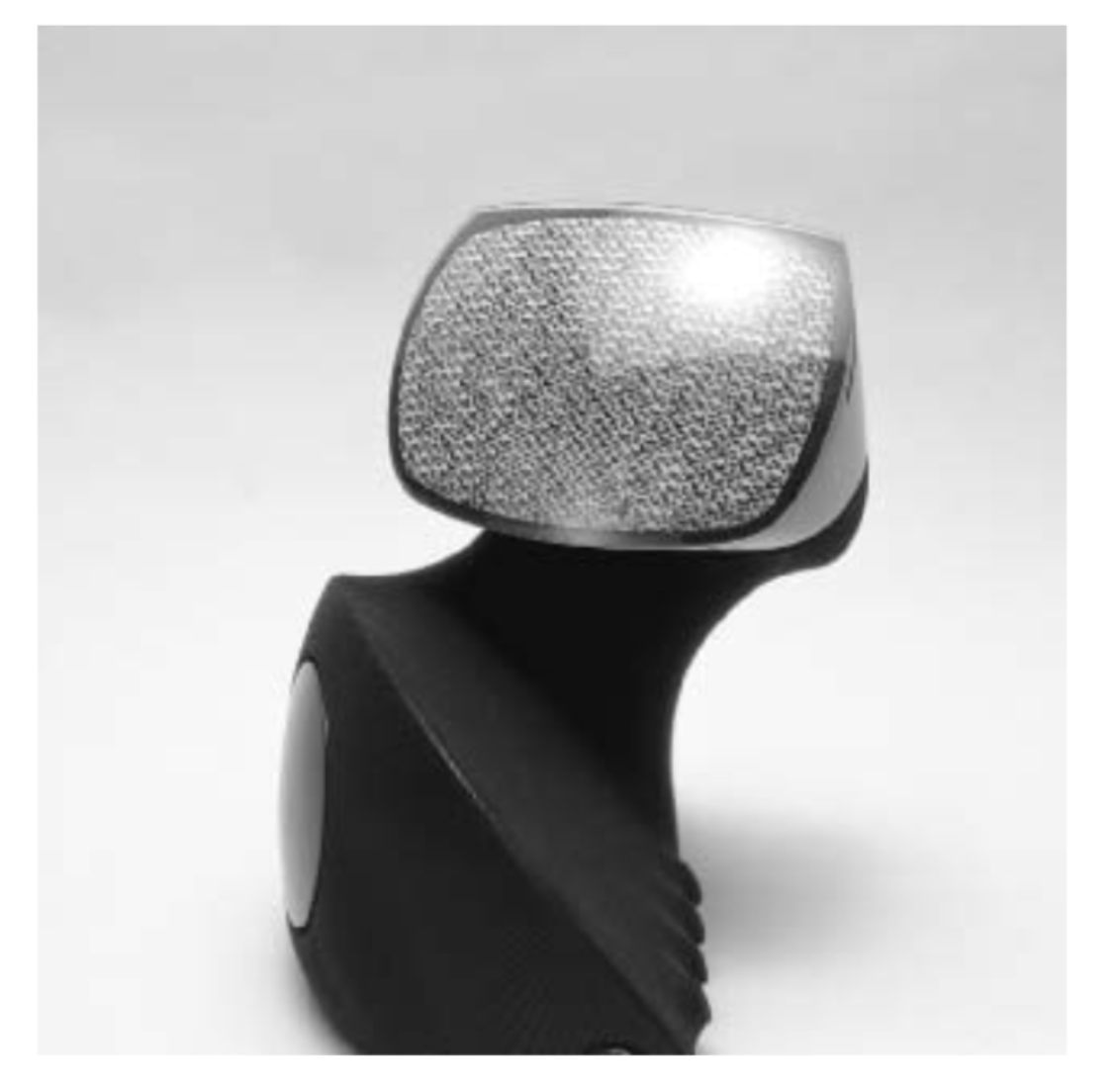
Peter Stathis's Satori TV (1988), which turns its |
By poeticizing the distance between people and electronic objects, sensitive skepticism might be encouraged, rather than unthinking assimilation of the values and conceptual models embedded in electronic objects. I am not arguing for a way of designing that is free from ideological content but, rather, for one that draws attention to the fact that design is always ideological. User-friendliness helps conceal this fact. The values and ideas about life embodied in designed objects are not natural, objective or fixed, but man-made, artificial, and muteable. (ibid)
A poeticizing or defamiliarizing approach suggests that the processes towards human-centered design doesn’t have to aim at ‘transparency’ as user friendliness, but may play on faultiness, obscurity, strangeness to provoke the interpretive and creative capacity of users and audiences.
This is also what we encounter in the last example from the near, but in terms of technology already distant past: Laurie Anderson’s CD-ROM game Puppet Motel (1995). Puppet Motel was a spearheading production, driven by Anderson’s investigation into her own (technologically very informed) artistic work, into the way in which computer technology was embedded in our lifeworld and social behaviour, and into the at the time new medium of CD-ROM games.
|
|
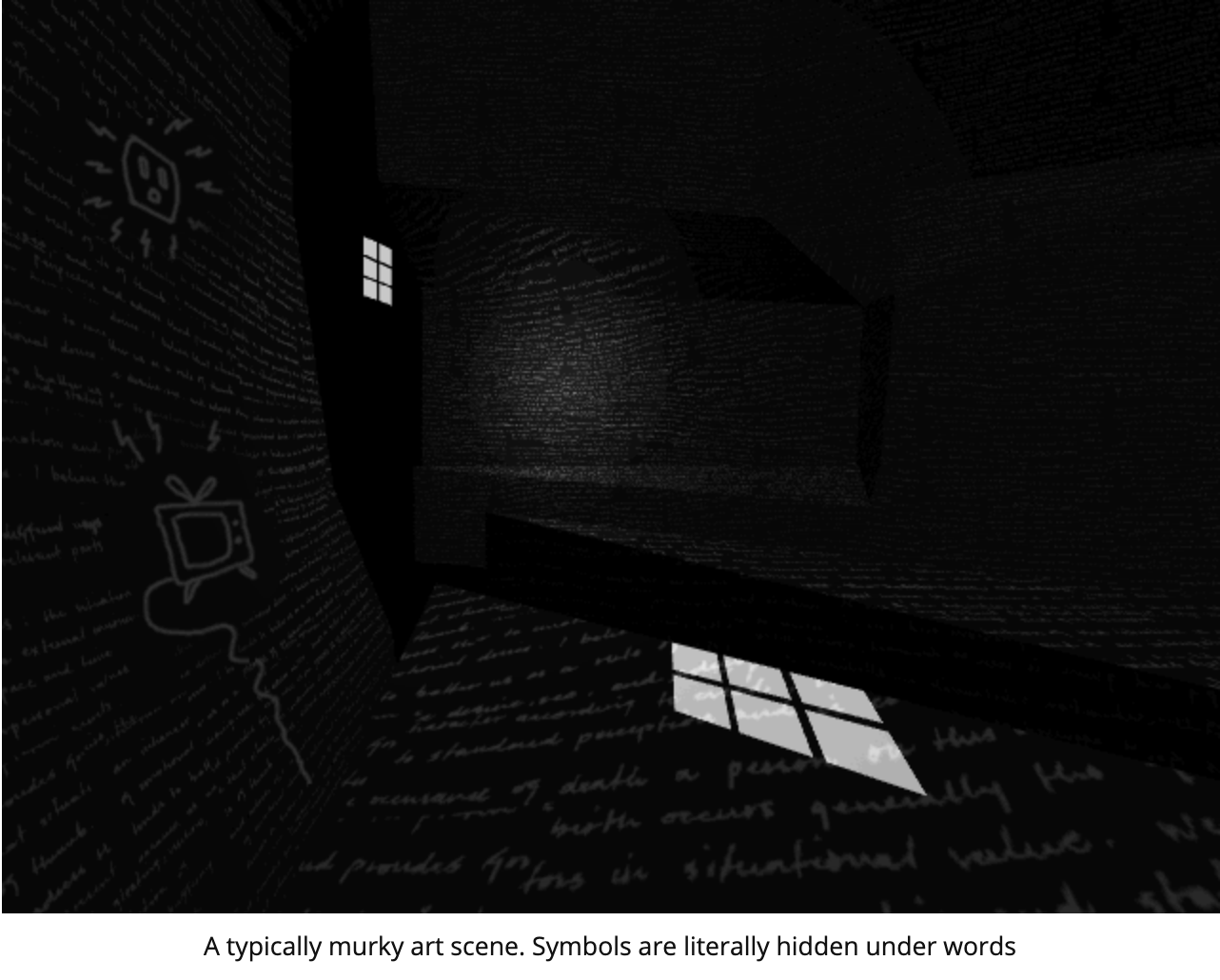
Today, playing Puppet Motel is not easy to come by, early computer and CD-ROM games have become technological obsolete and are both hard to find and hard to match with today’s hard- and software. But looking at visuals from the computer graphics of Puppet Motel while listening to Anderson in an 1995-interview for CD-ROM Interactive magazine, talking about her experiments with visual aesthetics and the associative game plan for Puppet Motel, you may get an impression of how Anderson’s game plays against user expectations: You would move through a rather dark universe of smaller interactive spaces, using a flash light and an eraser as game tools. The spaces and interacting with them would not organise into a plot or action driven narration, but rather challenge the user’s expectation of game structure and narration; for example, you would have–very patiently–to erase the entire overlayered text of one space in order to see the symbols hidden in scribble, that would point you another space in which you might encounter a lengthy poem to be listened to.
Watch Laurie Anderson-interview for CD-ROM Interactive, 1995
| Laurie Anderson Interview 1995 CD-ROM Interactive (YouTube) |
References
- Dunne, A. (2006). Hertzian Tales: Electronic Products, Aesthetic Experience, and Critical Design. MIT Press
- Shklovsky, V. (1917). Art as Technique (or Art as Device).