

1.1 Introduction to #dariahTeach
1.1.3 Contributing to #dariahTeach
 |
Educators can get involved with #dariahTeach in different ways. The most straightforward way is by using the content on the #dariahTeach platform. It is not necessary to teach the entire class from the chosen #dariahTeach course. Our content can be adapted to suit the needs of the educators, and specific materials can be used as materials to enhance curriculums. By doing so, the training materials provided on #dariahTeach can be repurposed. We hope that our colleagues see the benefits of being part of the #dariahTeach movement. Apart from using the learning materials, educators can also contribute to the #dariahTeach platform by:
Developing a new course- Educators and practitioners can propose a course based on their teaching material or their current research/design practices. It is possible for educators to use the course work they are teaching in a classroom and propose it to #dariahTeach. Examples of previous courses developed by educators are Practicing Design Thinking & Making, Remaking Material Culture in 3D, and Spatial Image Analytics.
Creating a #dariahTeach video-#dariahTeach would like to encourage those who work in the field of Digital Humanities or related fields to submit their own videos. Videos should speak to a wide audience, not only students in Digital Humanities, but those in related fields, as well as non-specialists and interest groups beyond the Digital Humanities (e.g. librarians, museum professionals etc.). The #dariahTeach course Introduction to Digital Humanities has clear guidelines and procedures on its How to Contribute page.
Translating an existing #dariahTeach course or teaching materials (video, audio, graphics)- Educators can provide translations of a course or a unit. This way we enable educators to use #dariahTeach materials in their own language while at the same time enriching the learning platform. #dariahTeach is pushing for multilingualism on the platform and encourages translations of course materials in as many languages as possible. Another way educators can enrich the platform is by adding their own materials to an existing course. For example, for the Introduction to Text Encoding and the TEI there is an encoding exercise using a poem from the Irish poet WB Yeats. It is possible to leave the instruction material in English, but add a new encoding example in another language, thus making it easier for students to do the encoding.
 |
|
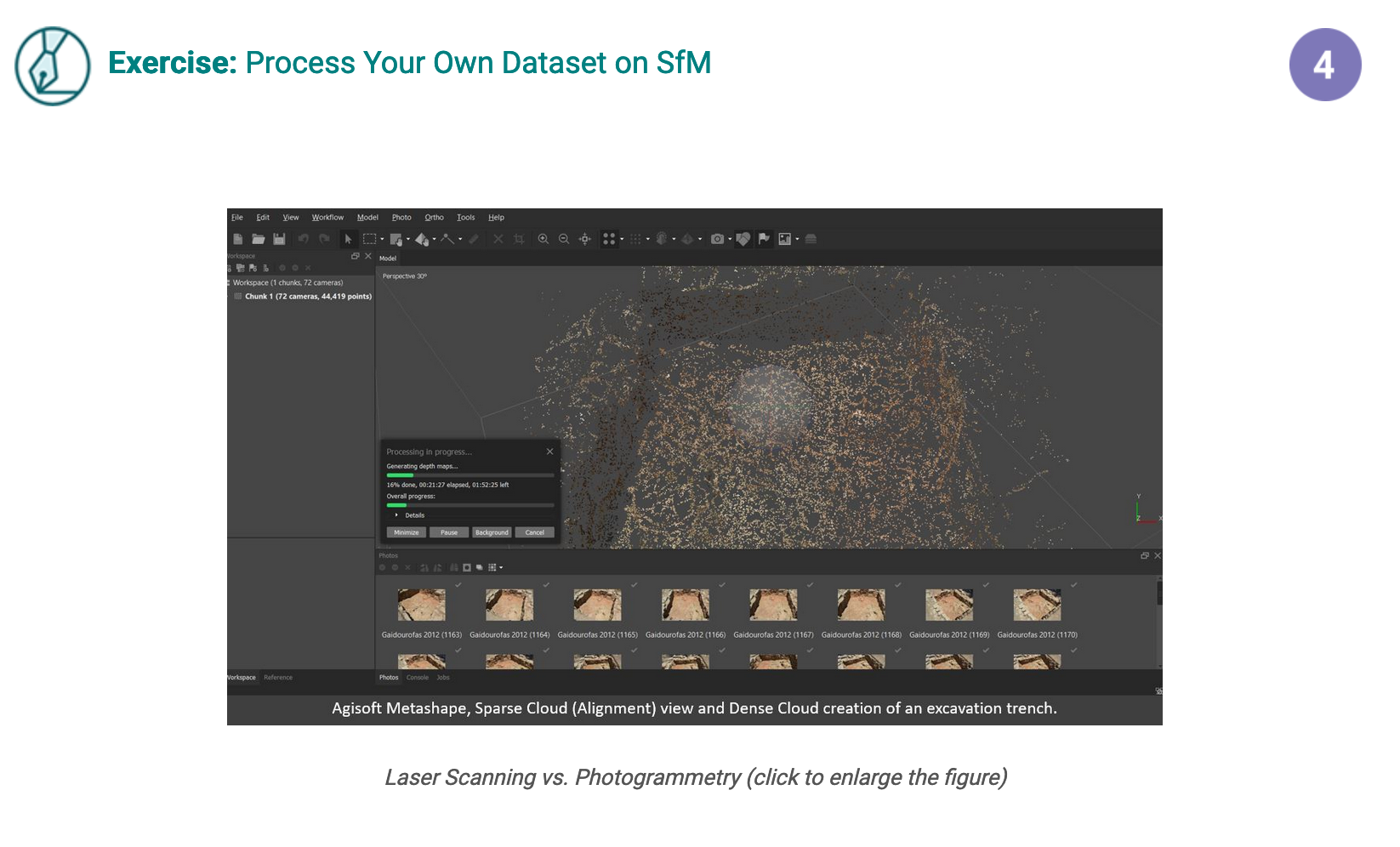
Course material from Remaking Material Culture in 3D, developed by dr. Costas Papadopoulos |
Who can contribute
We welcome working with educators or professionals working in any of the fields of the Digital Humanities or allied subjects. There are no strict guidelines on who can contribute to the #dariahTeach platform, but we do have some suggestions as to why it may of interest to:
- Early career researchers who have developed and delivered digital arts/humanities modules in their institutions;
- Experienced lecturers who have engaged with delivering online teaching materials or have not had the opportunity before;
- Individuals who have developed face-to-face workshops and would like to reconceive them for online delivery.
In 3.1 there will be more information on the formal procedure of contributing to the #dariahTeach platform.