

3.3 Analysing How Storytelling Works in Museum Space
Main goal: acquire skill of space and discourse analysis
3.3.1 Analysing Space, Discourse and Storytelling in the Museum
 |
In this video, you will be introduced to a variety of methods and tools, with particular focus on Roppola's space analysis framework. This framework will be utilised for the next two case studies. Click here to download the analysis framework as a Word document.
| Tools to analyse space, discourse and storytelling (YouTube) |
 Case Study: Analysing the Van Gogh Museum in Amsterdam
The video below is part one of a seven-part 4K tour of the Van Gogh Museum in Amsterdam. Based on the knowledge you have gained in the previous pages, analyse and evaluate the video with the help of the analysis grid (download here). Remember to keep the following prompts in mind:
- Analyse the space and its impact on audiences/narrative
- Identify where the narratives/stories are materialised
- Analyse the space and the discourse
- Reflect on matters of storytelling (who is talking, why, for whom, how, what model of communication is used, etc…)
| 4K Tour of the Van Gogh Museum in Amsterdam - Part 1 (YouTube) |
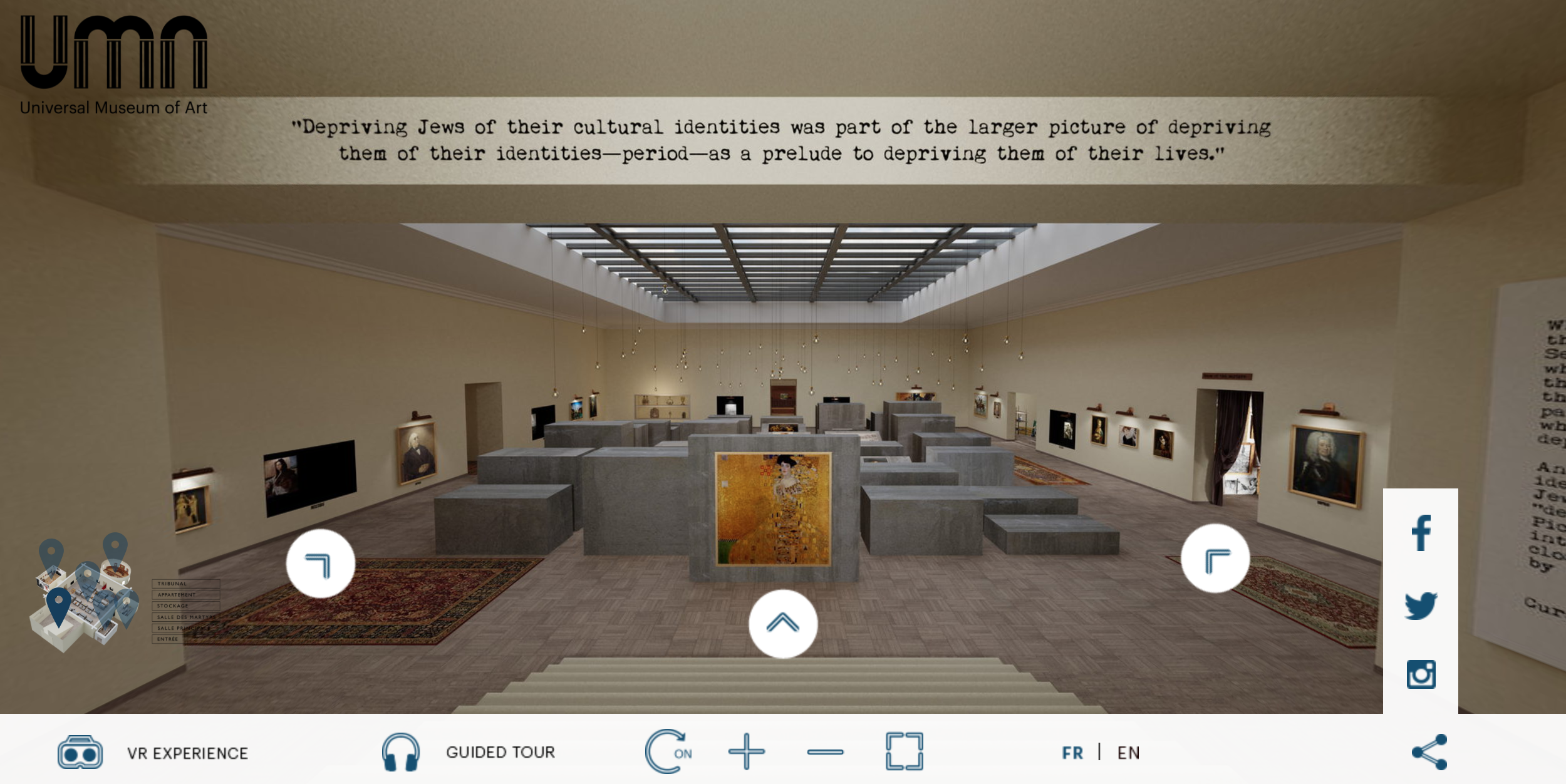
 Case Study: Analysing a Virtual Tour of The Louvre
Similar to the previous exercise, use the analysis grid again to evaluate and analyse how the storytelling performs in this virtual tour of the Louvre. Consider these questions whilst completing it:
- Are there improvements needed? If so, whathat could be improved?
- How does it fit in the typology of Palombini (2017)?
 |
|
Interactive Lourve Tour from the Universal Museum of Art |
References
- Bal, M., & Janssen, E. (1996). Double exposures the subject of cultural analysis. Hoboken: Taylor and Francis.
- Greenberg, R., Ferguson, B. W., & Nairne, S. (1996). Thinking about exhibitions. London: Routledge.
- Palombini, A. (2017) Storytelling and telling history. Towards a grammar of narratives for Cultural Heritage dissemination in the Digital Era, Journal of Cultural Heritage 24, pp. 134–139
- Roppola, T. (2012). Designing for the Museum Visitor Experience. New York, NY.