

4.3 Viewing 3D Models
4.3.1 3D Viewers and Repositories
 |
 |
|
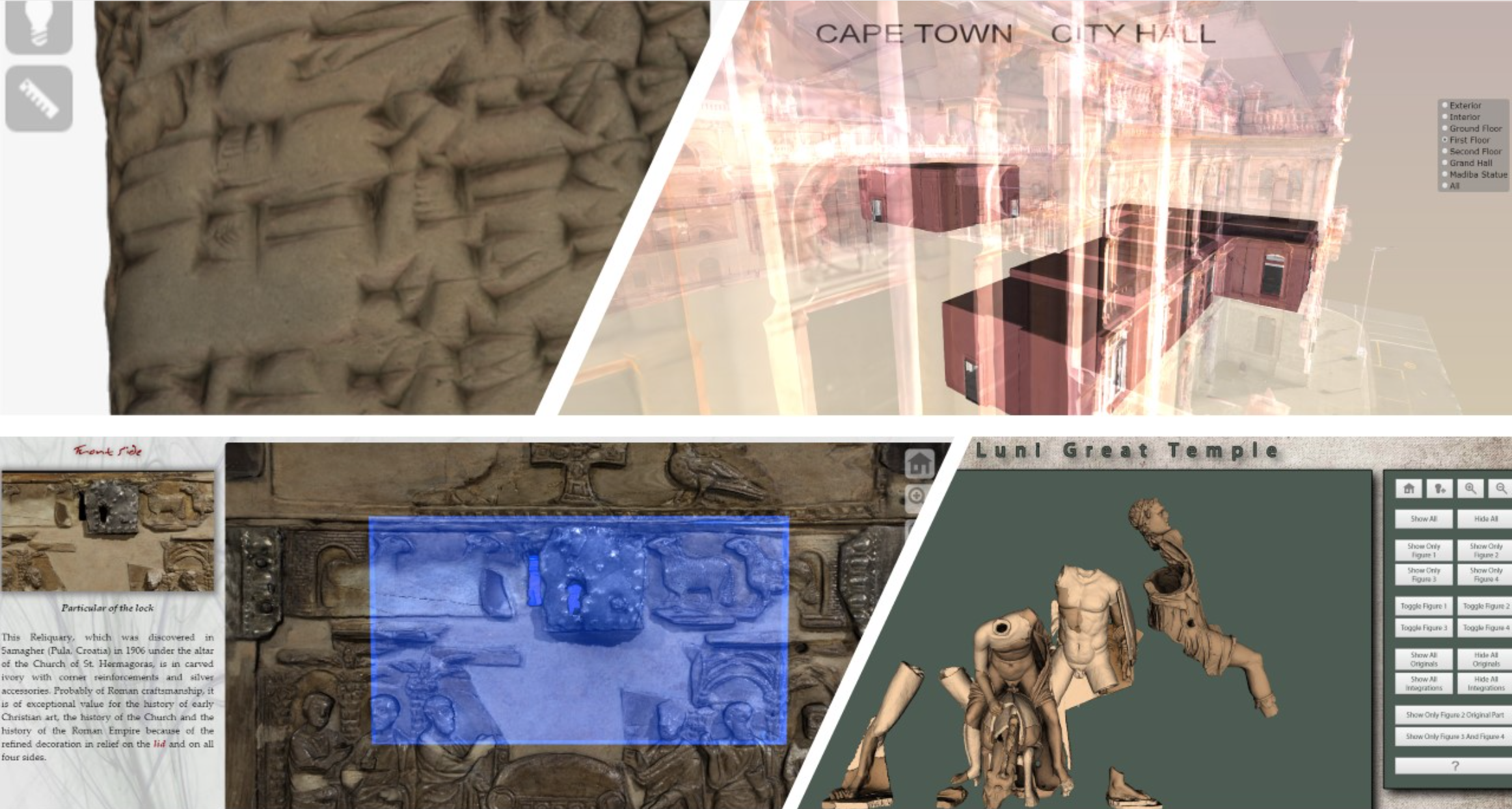
Different 3DHOP implementations, raging from simple 3D viewers to hotspots and interactive manipulations of model elements (click to enlarge the figure) |
 |
|
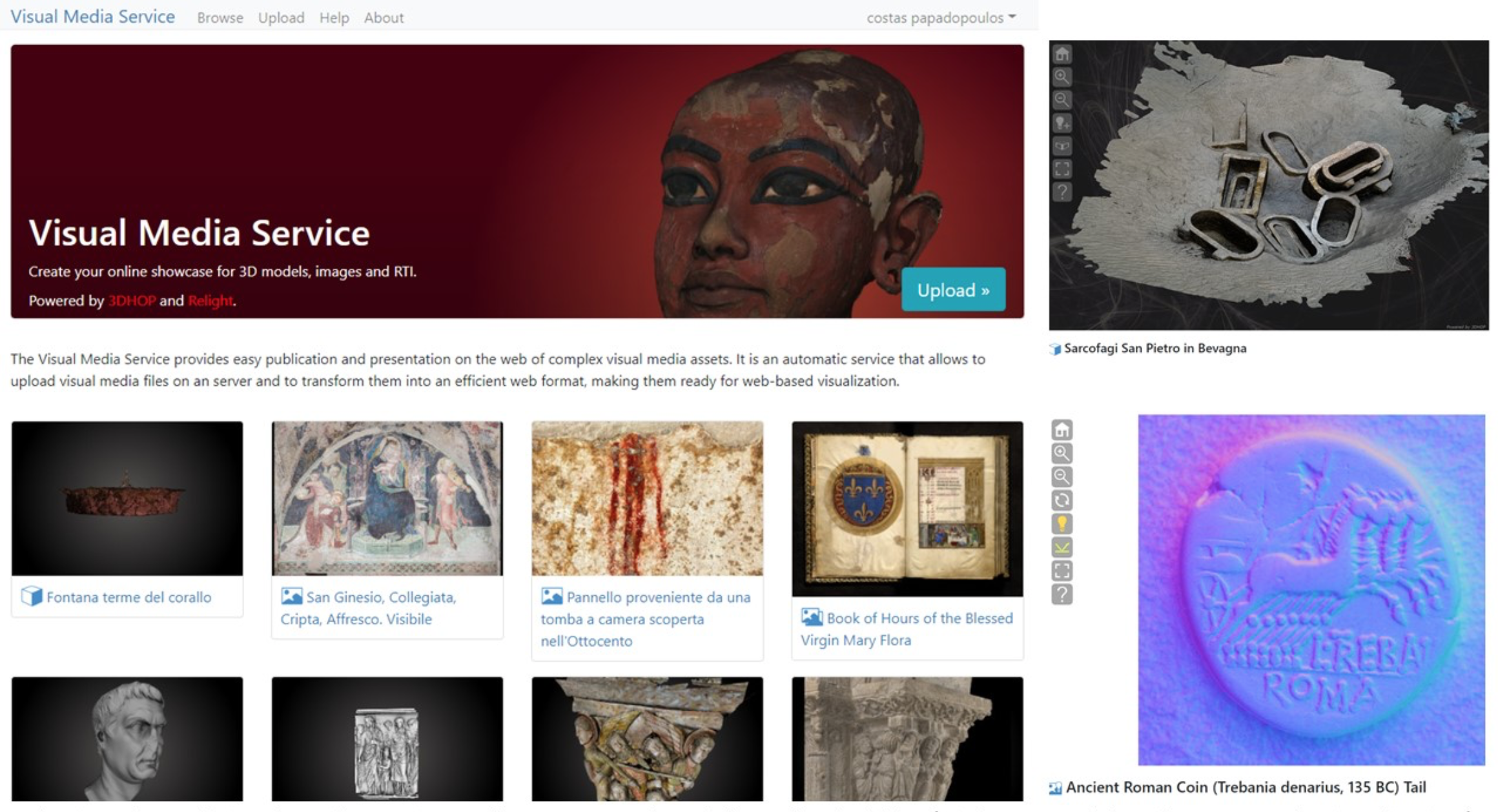
The Interface of Visual Media Service and some examples of the uploaded files. Right: 3D model and RTI Normals Visualisation (click to enlarge the figure) |
Several browser-based apps have been developed in the last few years that allow users to view and share 3D files without using the software in which the 3D model was designed. These include software such as the Online 3D Viewer, P3D.in, and Creators3D. It is out of the scope of this unit to discuss all the different 3D viewers available, since most of them were not developed to serve the needs of cultural heritage specialists. However, one of them, Sketchfab, which is both a viewer and a repository has been gaining traction both in the world of 3D modellers as well as in cultural heritage institutions.
 |
|
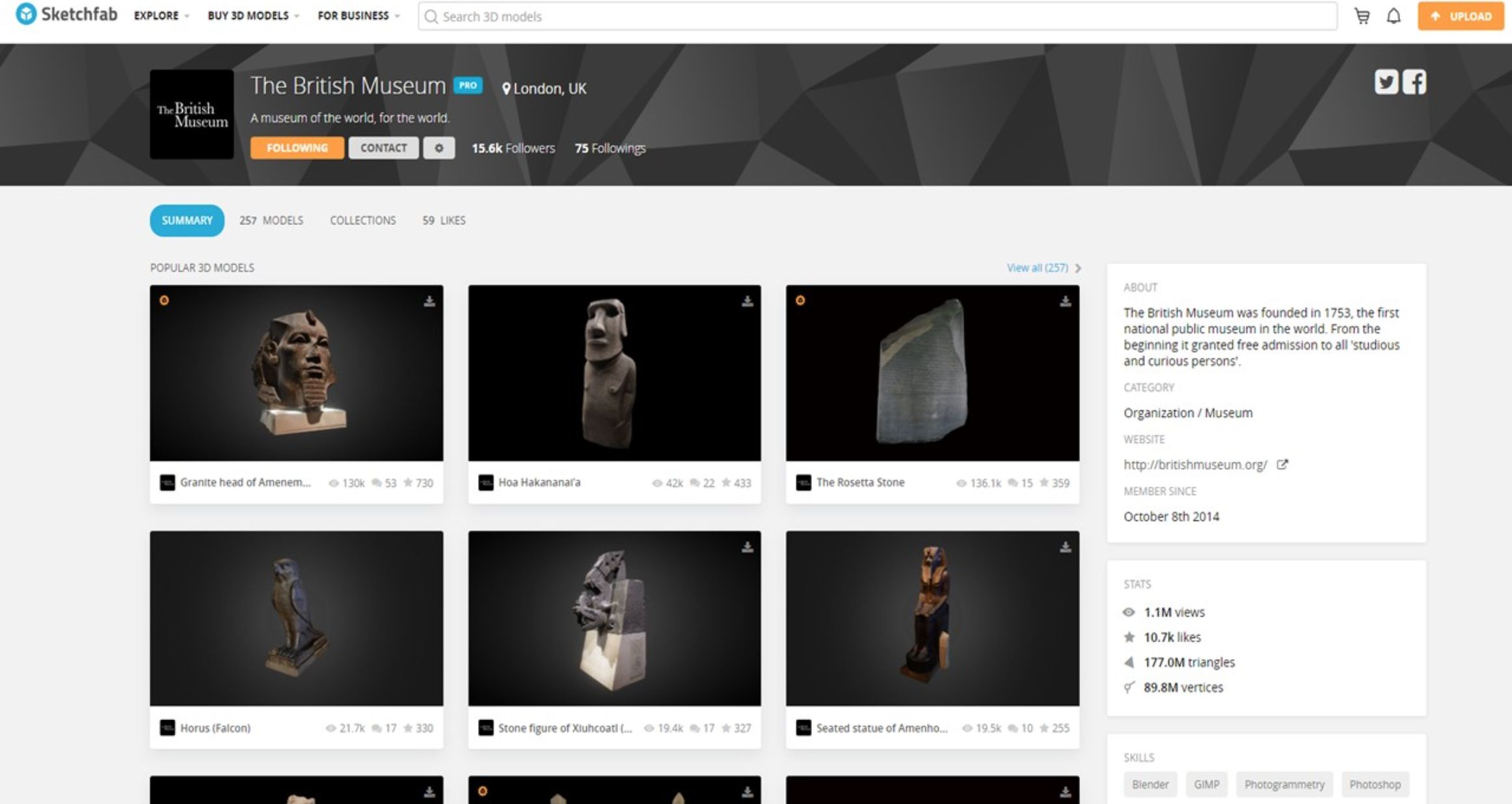
The British Museum Channel of Sketchfab (click to enlarge the figure) |
Sketchfab is a commercial platform, which does not require coding skills to upload or manipulate the 3D models. Although it has less flexibility in comparison to 3DHOP, it allows annotation in the form of text or sound, different rendering modes, canvas personalisation, a stereoscopic (Virtual Reality) mode, as well as comments by other Sketchfab users. After realising the need in the heritage sector for a service which could be used by novices to upload, share, and store 3D models, the company established a cultural heritage department, hiring Thomas Flynn, originally a Sketchfab community member that had an instrumental role in communicating the power of 3D for cultural heritage. it is worth noting, that although Sketchfab is a for profit platform, it offers free premium accounts for cultural heritage institutions. Major institutions and heritage projects, such as the British Museum, the University of South Florida Libraries, Historic Environment Scotland, Iconem, Micropasts, and the Discovery Programme, all have their own channels on Sketchfab, using it as the main platform for publishing and sharing online the 3D models they produce. it is also worth noting that many of these models can only be downloaded for non-commercial uses (e.g. 3D printed, embedded in games or other applications etc.)
Further Readings/Additional Resources
- How to Use 3DHop: http://vcg.isti.cnr.it/3dhop/howto.php
- Visual Media Service: https://visual.ariadne-infrastructure.eu/
- MeshLab: http://www.meshlab.net/
Links to 3DHOP Projects
- Cuneiform 3D Project: http://dhprojects.maynoothuniversity.ie/2017/3dcuneiform/
- Capsella Samagher: http://vcg.isti.cnr.it/3dhop/demos/capsella/index_capsella.html
- Cape Town City Hall: http://web1.capetown.gov.za/web1/facilitybooking/3DHop/City_Hall_3D.html
- Luni Great Temple: http://vcg.isti.cnr.it/3dhop/demos/luni/index_luni.html
- Complete list of 3DHOP Projects: http://vcg.isti.cnr.it/3dhop/demo.php
Links to Sketchfab Cultural Heritage Projects
- The British Museum: https://sketchfab.com/britishmuseum
- The Discovery Programme: https://sketchfab.com/discoveryprogramme
- University of South Florida Libraries: https://sketchfab.com/USF_digital
- Historic Environment Scotland: https://sketchfab.com/HistoricEnvironmentScotland
- Iconem: https://sketchfab.com/iconem
- Micropasts: https://sketchfab.com/micropasts